
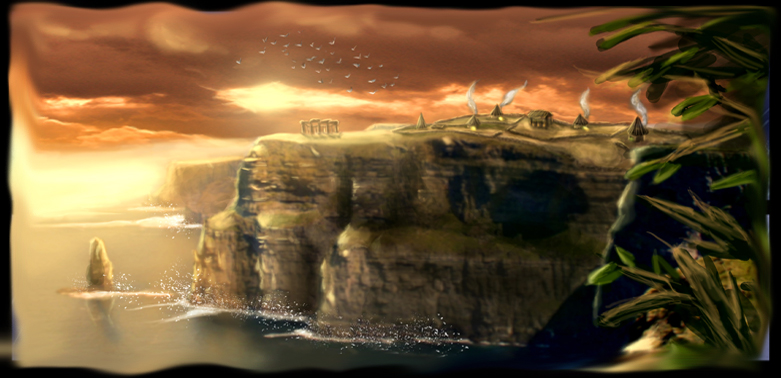
In Cú Chulainn’s Footsteps I gCéimeanna Chú Chulainn
A bilingual 3D adventure created to bring the Irish language, mythology and culture to a new generation through videogames.
Learning through play
In Cú Chulainn’s Footsteps was conceived as an experience capable of bringing the Irish language and culture to a new generation through videogames.
Developed by Duineacu, the project was aimed especially at children aged 8 to 12 and proposed a different way to learn: explore, play and discover Ireland from inside its own legends.
A central feature was its bilingual design. Players could move freely between Irish and English during the experience. Language was not separated from the game as a lesson: it was embedded in exploration, dialogue, clues and progression.
An island built from Irish legends
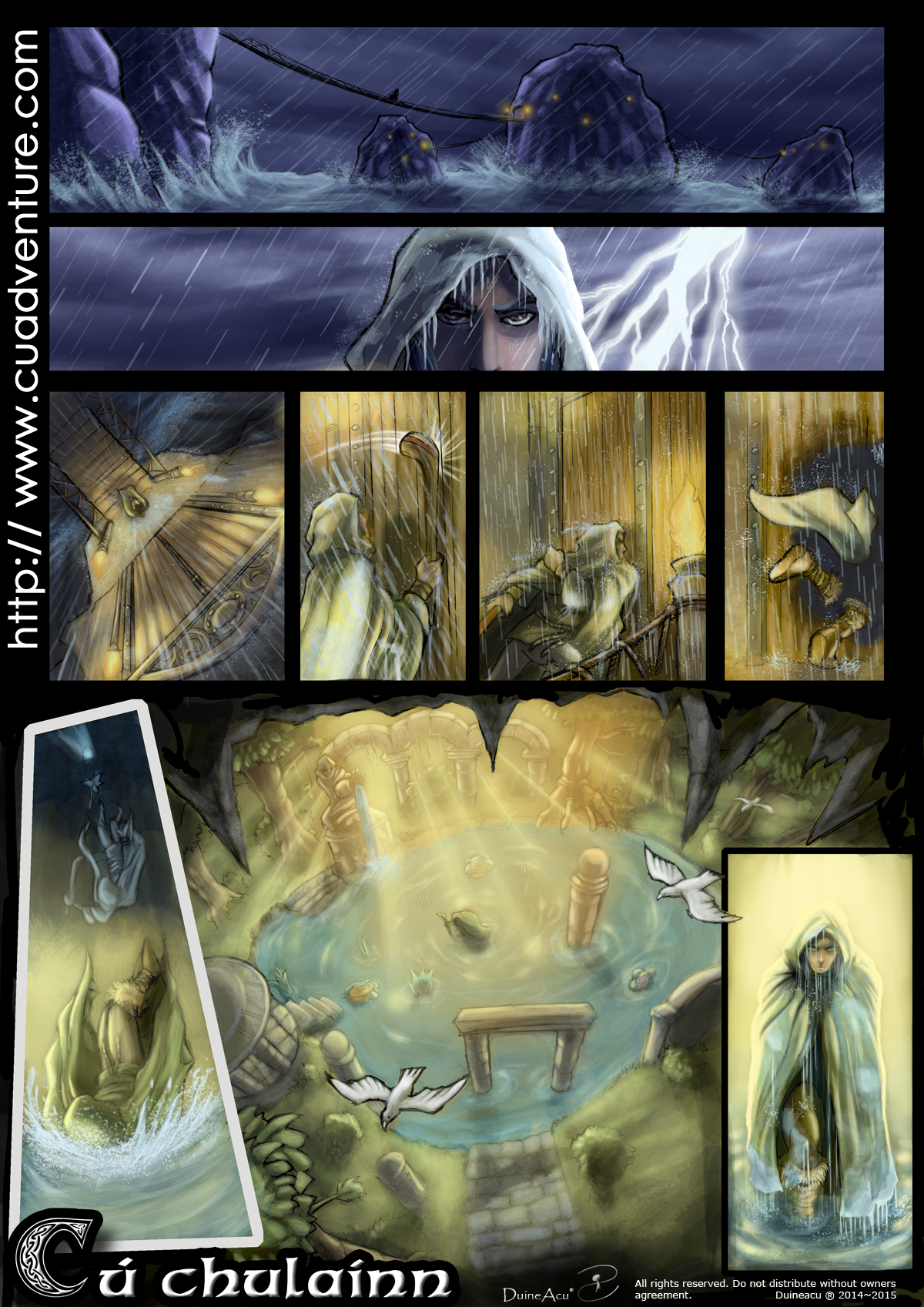
The adventure takes place on a mysterious island inspired by the world of Irish mythology. Cú Chulainn and the stories of the Ulster Cycle are a major axis of the game, while its world also reaches into other traditional figures and stories.
These include Fionn mac Cumhaill, his teacher Finegas and the legendary Salmon of Knowledge. Myth is not simply decoration: it becomes part of discovery, clues and learning.
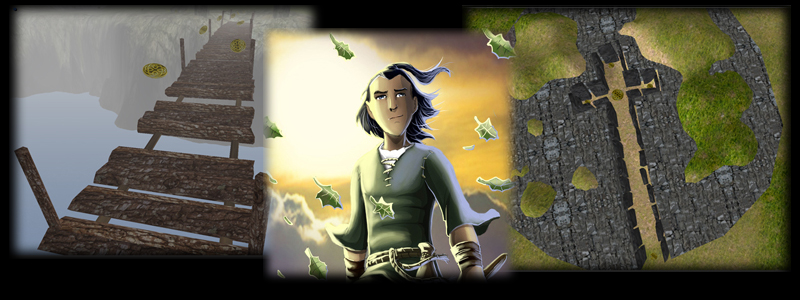
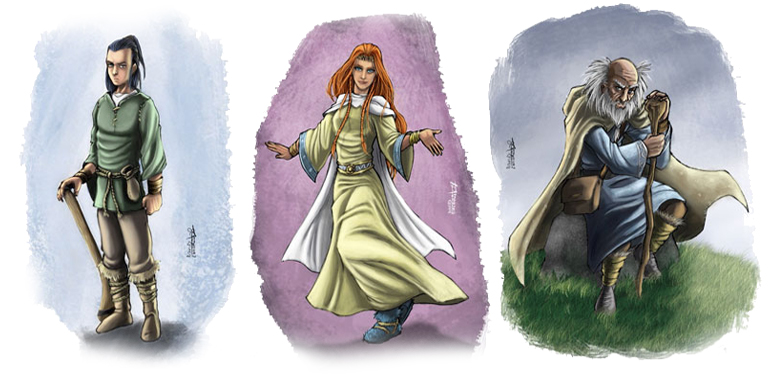
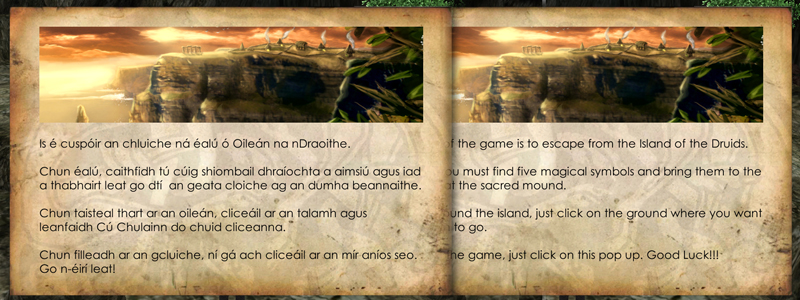
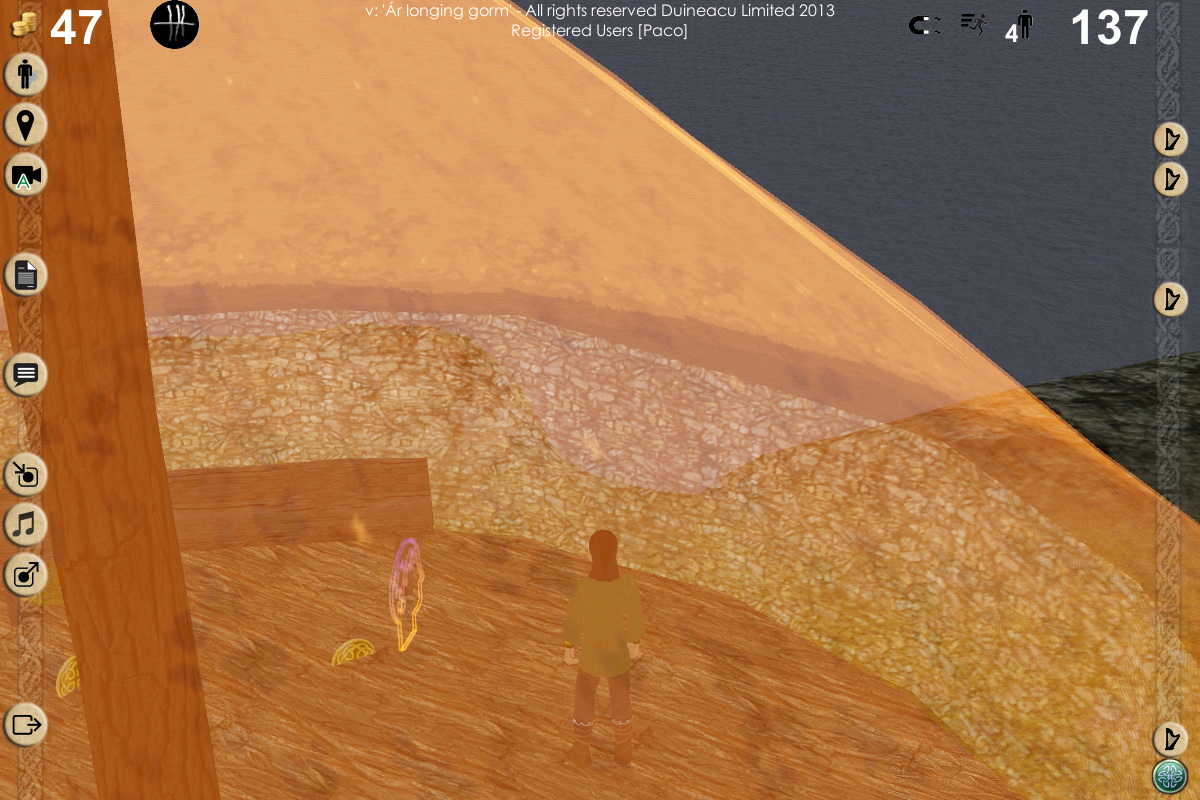
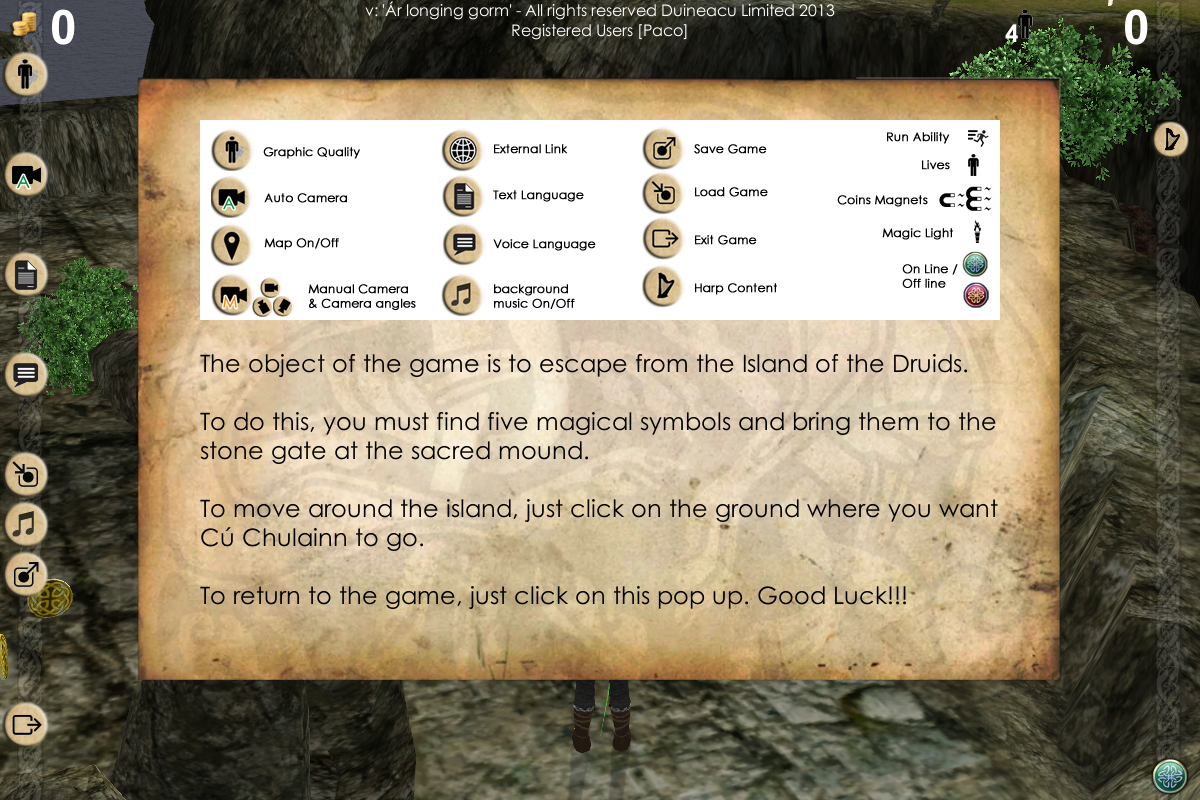
Material and screenshots from the original In Cú Chulainn’s Footsteps archive.
Escape the island
Players explore the 3D environment, find information, interpret clues and solve a sequence of riddles in order to discover how to escape the island.
One of its characteristic mechanics is the set of Celtic information harps placed throughout the world. They provide stories, facts and clues required to understand the environment and solve challenges, with some remaining locked until particular goals have been achieved.
The five druids
The island includes a mission built around five druids, each associated with a sacred mound. Their stories and locations form part of the mysteries the player must investigate.
An accessible 3D adventure
The game was designed as a third-person 3D adventure with deliberately straightforward controls, allowing young players —including those with little previous experience of 3D worlds— to focus on exploration and problem solving.
The project was released for Windows, Mac and Linux.
Music, sound and voices of Ireland
Eduardo Tarilonte was the composer and the creative force behind the original music and complete sound ambience of In Cú Chulainn’s Footsteps. His work helped define the identity of the game world, accompanying its exploration, mythology and the different spaces across the island.
The project also featured music by Clannad, Kíla and Sharon Shannon, while narration included the unmistakable voice of Mícheál Ó Muircheartaigh, one of Ireland’s best-known broadcasting and Gaelic games voices.
Language, composition, soundscape, voice, mythology and landscape were brought together to create an experience firmly rooted in Ireland.
An educational project built as a videogame
Although Irish-language learning was at the heart of the project, In Cú Chulainn’s Footsteps was conceived first as a videogame rather than a sequence of educational exercises.
Exploration, riddles, characters and mystery were the vehicles through which players encountered linguistic and cultural material. That approach brought the project to newspapers, television and studies of digital tools for Irish-language education.
Videos and original material
Project support and collaborators
Throughout its development and public life, In Cú Chulainn’s Footsteps received support, collaboration or participation from organisations connected with the Irish language, education, sport and media, including Meath Local Enterprise Office (LEO), Foras na Gaeilge, GAA, COGG, TG4 and Raidió na Life 106.4FM.
The project also featured the participation of highly recognisable figures from Irish culture: Mícheál Ó Muircheartaigh, together with music by Sharon Shannon, Clannad and Kíla.
Media coverage and archive
The project received coverage in Irish media including The Irish Independent and The Argus / Dundalk News. TG4, Ireland’s Irish-language public television service, broadcast a feature on the game in November 2013, showing its 3D environment and highlighting its music and narration.
The game also appears in documentation from An Chomhairle um Oideachas Gaeltachta & Gaelscolaíochta (COGG) concerning apps and web games for Irish-language education.

The legacy of In Cú Chulainn’s Footsteps
In Cú Chulainn’s Footsteps represents an important stage in the journey that now converges in Crannsoft. It brought together 3D development, game design, education, language, music and cultural heritage in an experience intended to show that technology can also help keep stories, languages and forms of identity alive.
Years later, the same philosophy remains part of Crannsoft: videogames not only as entertainment, but as a medium for exploring new forms of interaction, culture and participation.
Duineacu, the company responsible for the original development of In Cú Chulainn’s Footsteps, is now integrated into Crannsoft, bringing its experience, technology and the legacy of those projects into this new stage.