
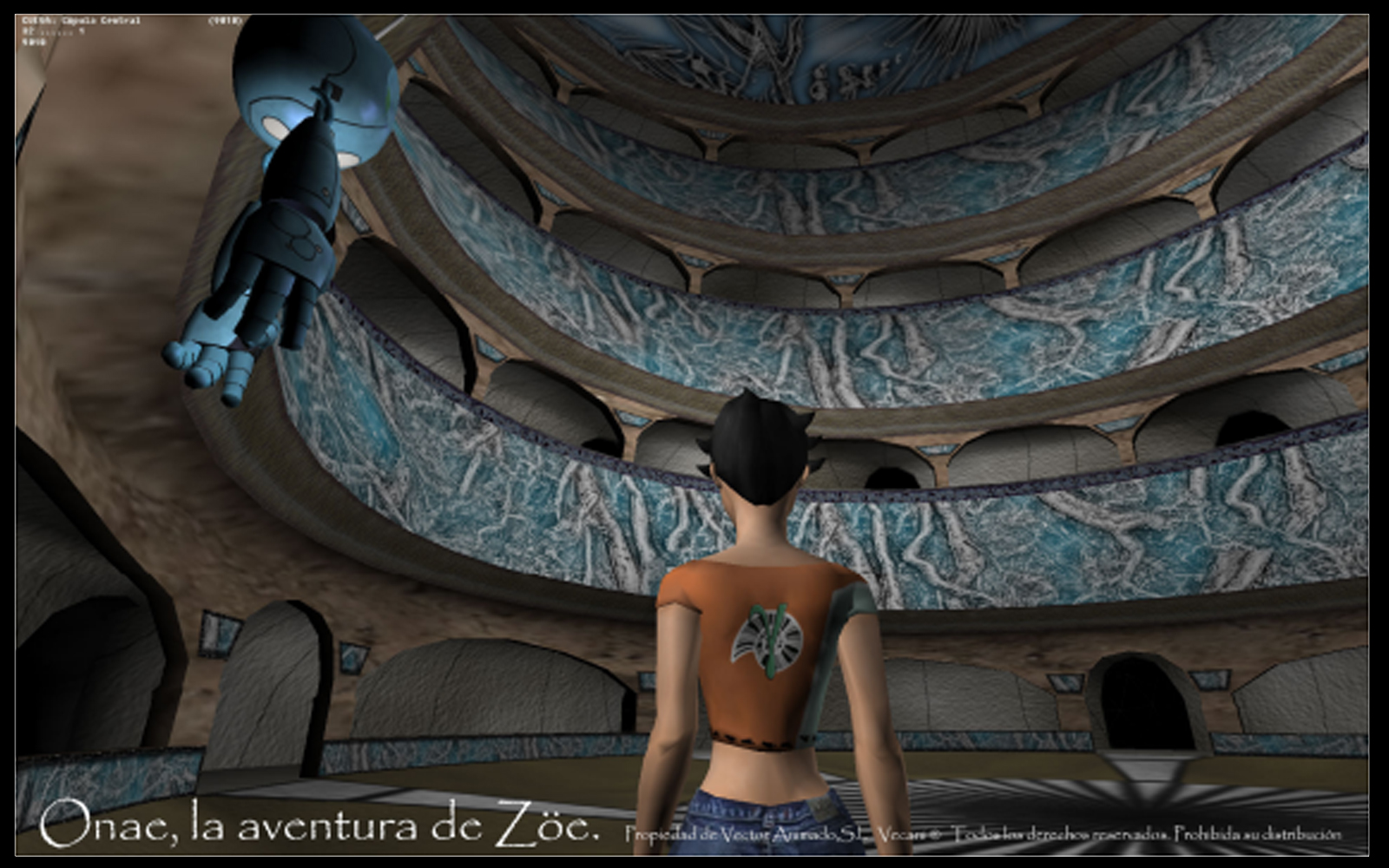
Onae, Zoe’s Adventure
A 3D adventure designed so that sight would not determine who could play.
One adventure for different players
Onae, Zoe’s Adventure began with a very specific idea: to create a videogame in which sighted players and blind or visually impaired players could share the same experience and play under comparable conditions.
Developed by Vector Animado (Vecani) for ONCE-CIDAT, the project combined adventure, exploration, puzzles and minigames with spatial-audio navigation technology that made hearing an essential part of gameplay.
The result was unusual for its time: a videogame designed from the outset so that different ways of perceiving the world could coexist inside the same virtual space.
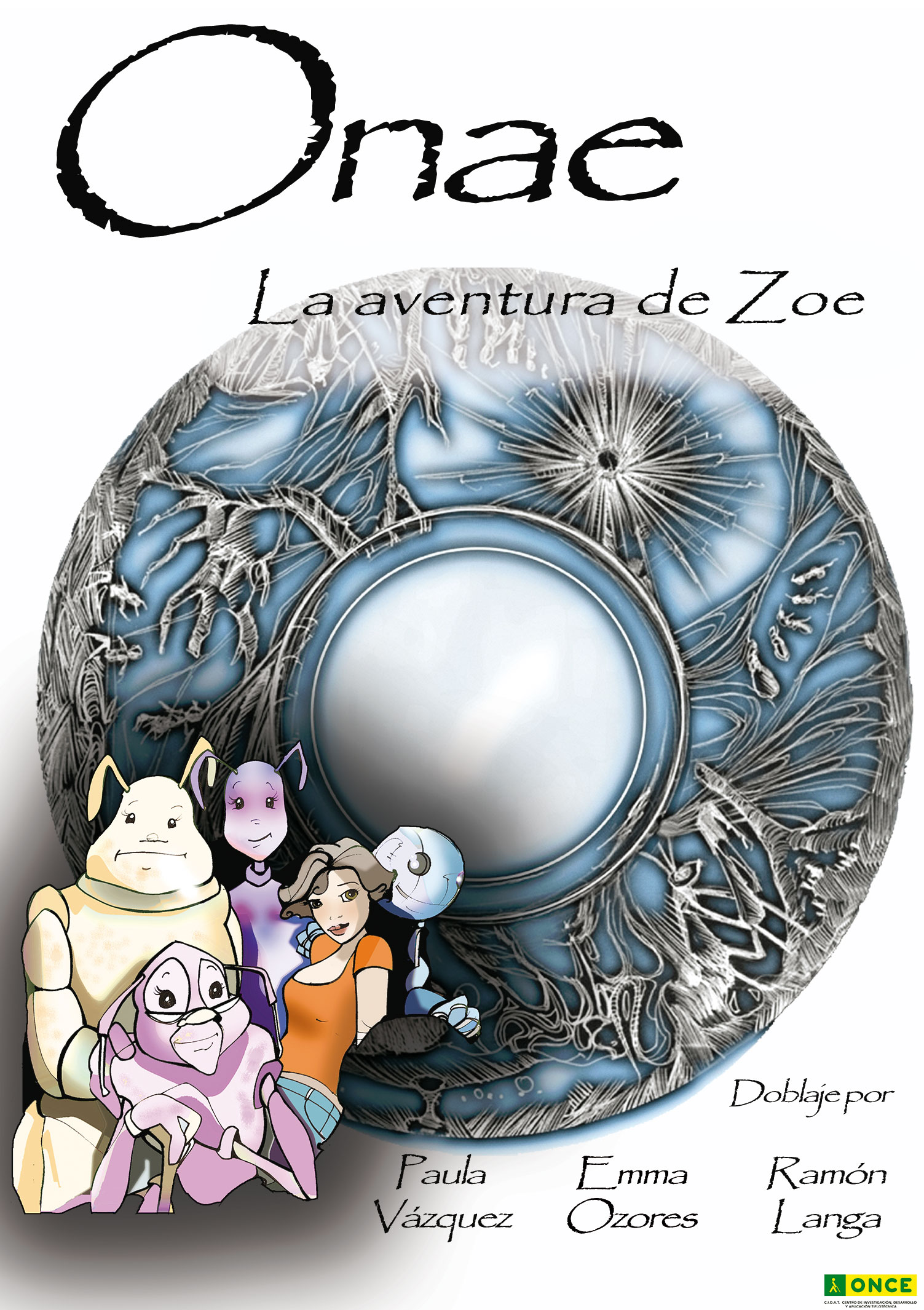
Zoe’s adventure
Zoe is a young geology student collecting samples in a mine with her guide robot. An earthquake changes everything: after falling into the depths, she wakes in an unknown subterranean world inhabited by a mysterious civilisation.
From that moment on, the player must help her find a way out. The adventure unfolds through different environments, characters, puzzles and minigames that reveal the story and open the path through this hidden world.
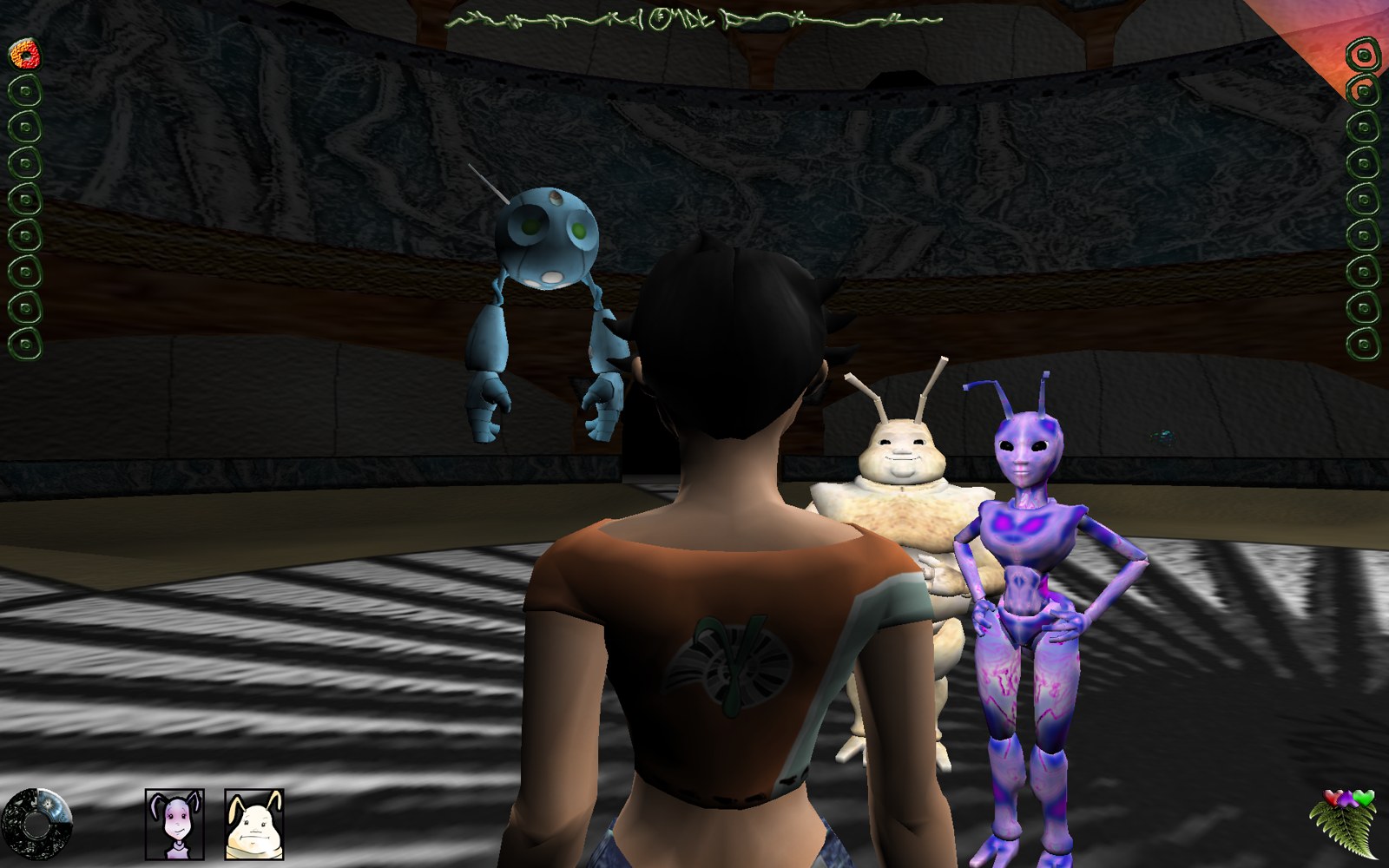
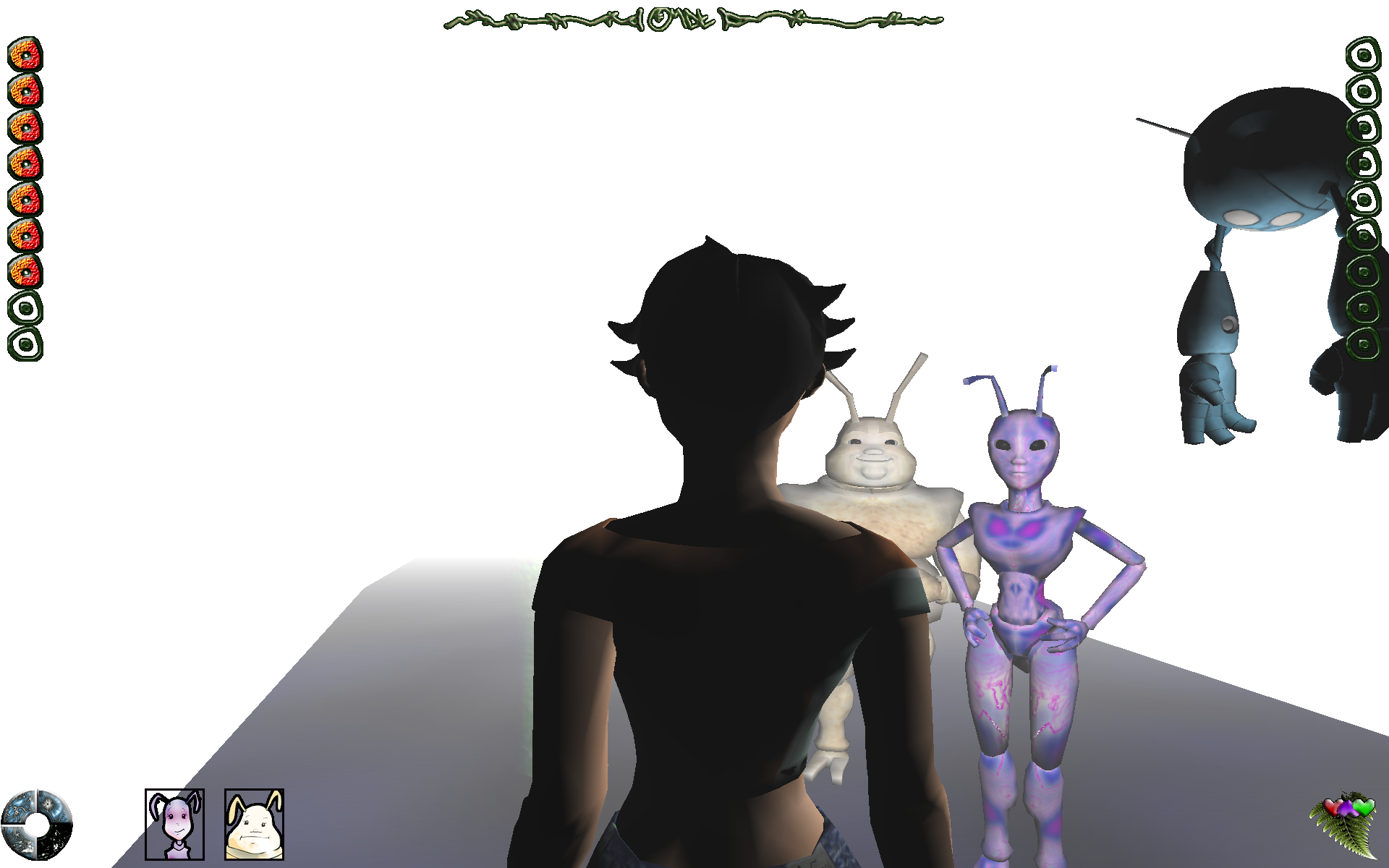
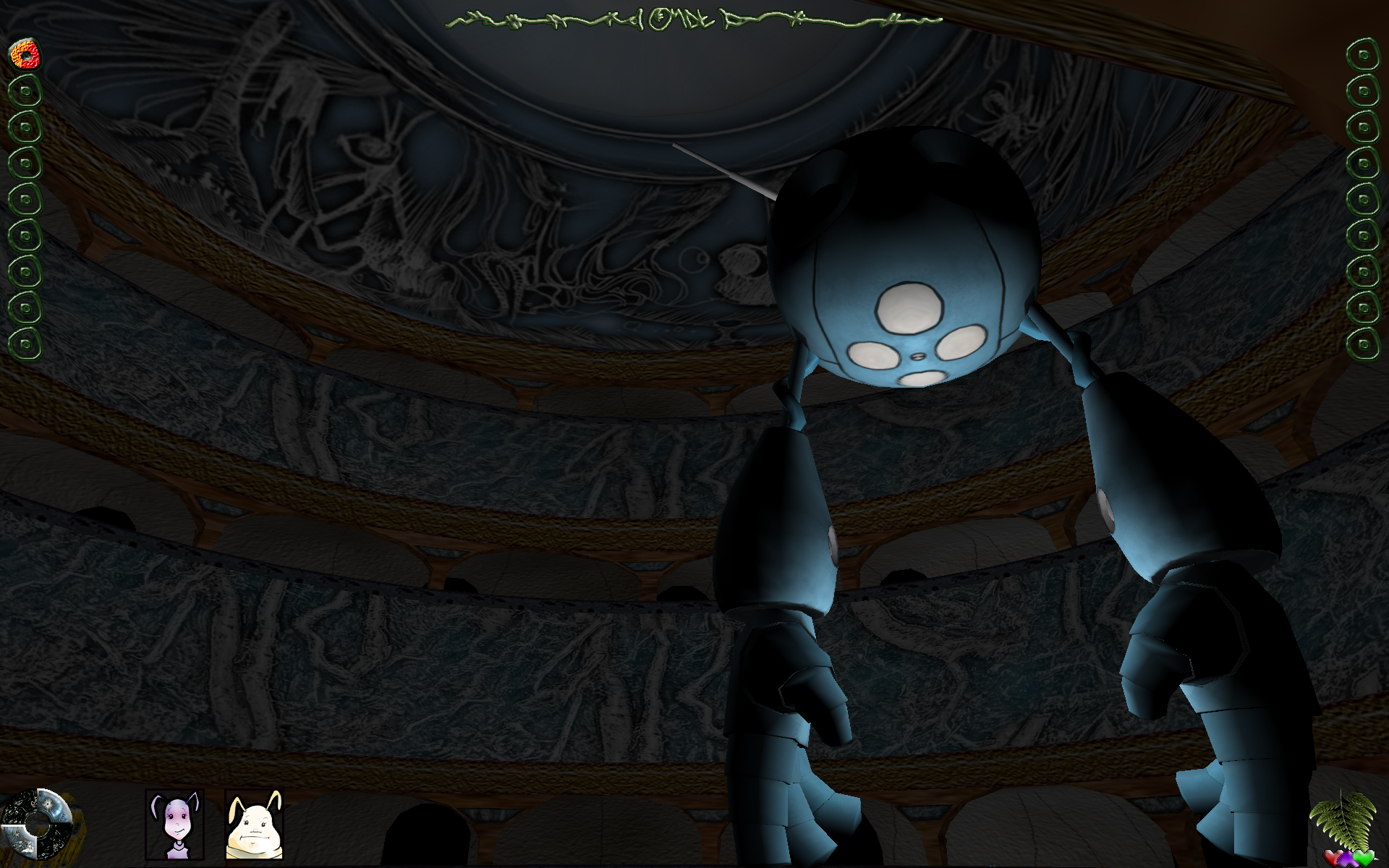
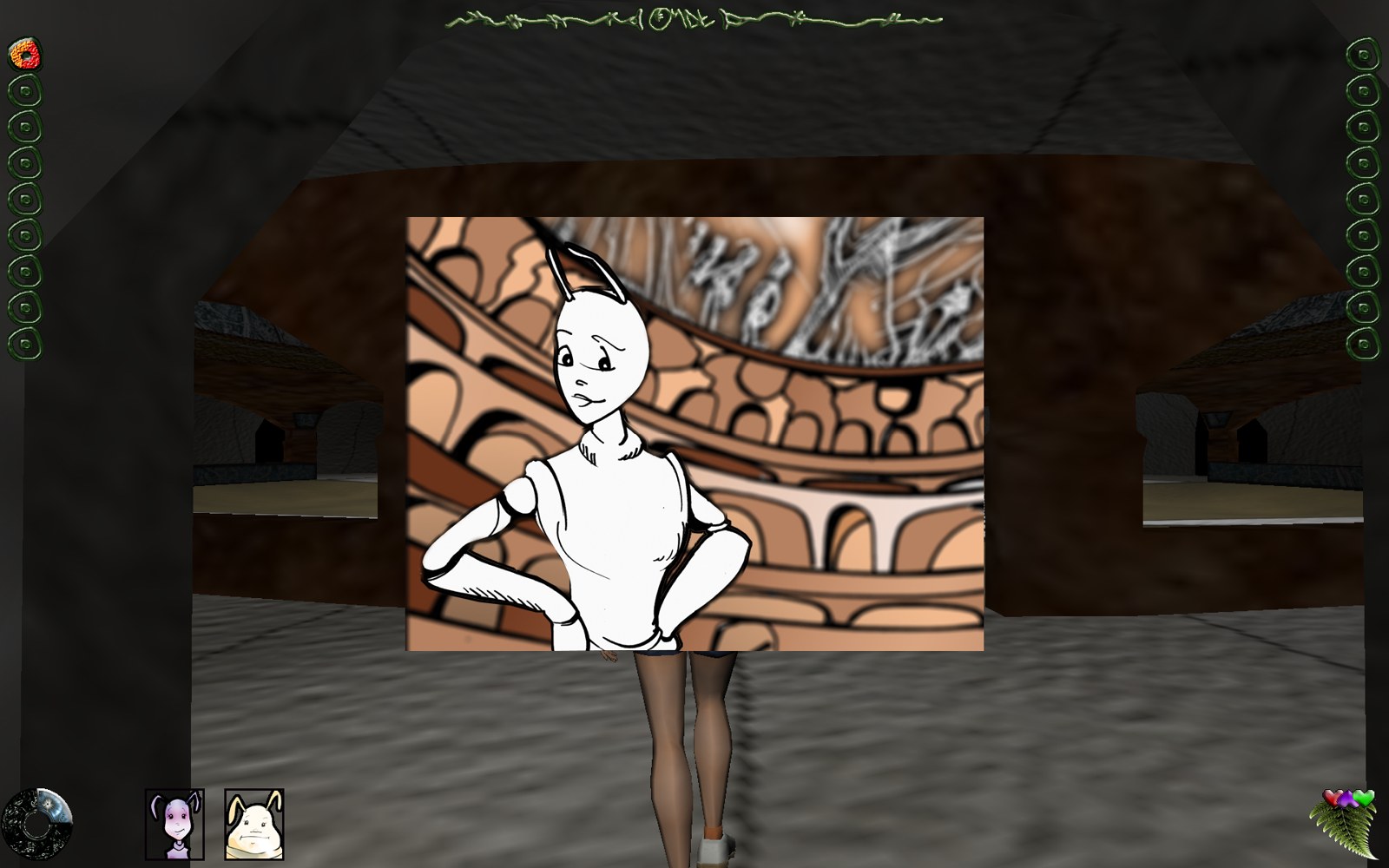
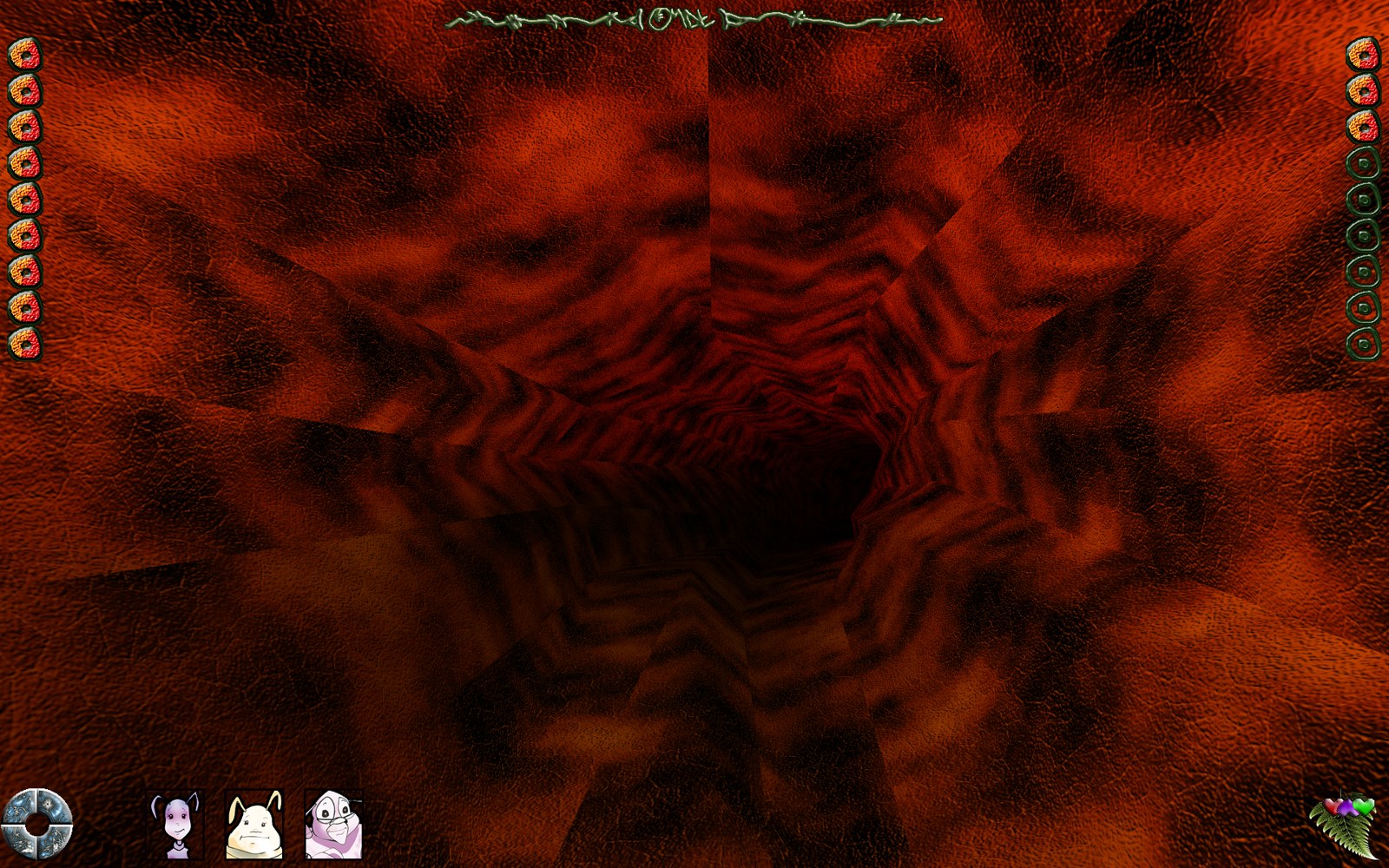
Screenshots from the original Onae archive (2007).
Playing on equal terms
One of Onae’s fundamental principles was that sight should not determine who had the advantage. The game was designed so that a sighted player and a blind player could face the same challenges through different but equivalent interaction systems.
In some situations, visual elements could even be deliberately misleading. Players had to learn not to trust only what they saw, but to pay attention to acoustic cues, the position of sounds and information supplied by the environment.

Sound as space
At the technological core of Onae was VCS —Vis Caeca Soni—, technology developed to represent virtual spaces and enable navigation through sound.
VCS made it possible to identify positions, directions, references and objects in the environment without depending exclusively on visual representation. The game incorporated acoustic navigation tools, sonar systems and sound references that helped players build a mental picture of the space around them.
The aim was not to create a simplified version for blind players, but for all players to share the same world, the same logic and the same objectives.
VCSAn adventure, not a technology demo
Although its accessibility technology was one of its most innovative elements, Onae was conceived first and foremost as a videogame. Zoe’s story unfolded through exploration, conversations, narrative sequences, comics, puzzles and different kinds of minigames. Technology was meant to serve the adventure, not the other way around.
Comics, characters and minigames
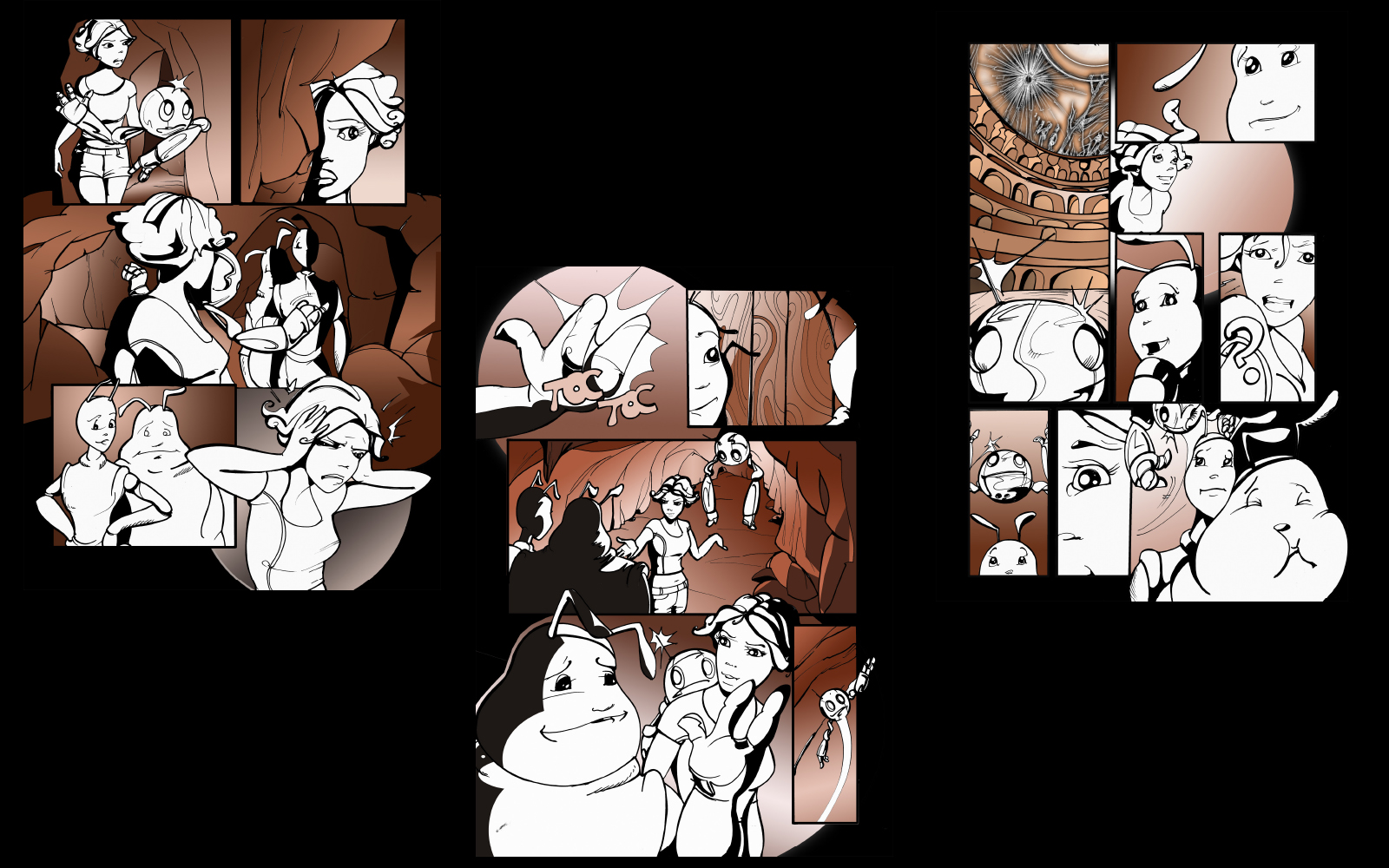
The narrative included comic sequences to develop the story and introduce events and characters. Minigames broke up the exploration and introduced different mechanics while retaining the principle that they should be playable by people with different levels of vision.
Watch Onae, Trailer & Comics on YouTube →Five languages
The game was available in Spanish, Catalan, Galician, Basque and English. Localisation went beyond text: voices and the information required to follow the adventure formed part of the game’s communication system itself.
Eduardo Tarilonte: music and soundscape
The soundtrack and sound ambience of Onae, Zoe’s Adventure were created by Eduardo Tarilonte. His work went beyond musical composition: in a project where sound had exceptional importance, the creation of environments, atmospheres and acoustic spaces was an essential part of the game’s identity.
Music, effects, voices and spatial references had to coexist without masking one another while building a world that could be interpreted both visually and aurally. Here, the soundscape was part of the scenery itself.
Recognisable voices
The production featured the voices of Paula Vázquez, Emma Ozores and Ramón Langa. In a game where audio was one of the main ways of relating to the virtual world, voice performance had particular importance.
A project for ONCE-CIDAT
Onae was developed for ONCE-CIDAT as part of a line of research and development exploring new ways of accessing videogames. Accessibility and gameplay were conceived as part of the same architecture: not adapting a game after completion, but designing it from the outset to be shared by different people.
Impact and archive
The proposal attracted attention from numerous Spanish media outlets. Publications including El Mundo, La Vanguardia and La Voz de Galicia highlighted the possibility for blind and sighted people to play on comparable terms and the central role of sound in the game.
Press and references
A game tied to its era
The original edition was built for the architectures and operating systems of its time, particularly Windows XP. Changes in Windows and the move to 64-bit architectures mean that the original game no longer runs correctly on most current computers. That preservation problem is one of the reasons behind its return.
Videos and original material
Several videos from the original project survive, showing the game in action, its sound-based approach and part of its audiovisual media coverage.
Onae, Zoe's Adventure
Original demonstration material showing scenes, gameplay and minigames from the project.
Watch on YouTube →ONAE VCS Engine Sound Active
A demonstration focused on the sound engine and spatial orientation inside the virtual environment.
Watch on YouTube →Onae on television
A television feature on the original project and its accessible-game design approach.
Watch on YouTube →Onae 2026
Two decades later, Zoe’s story is ready to return. Crannsoft is working on a new edition designed to bring the original title to current systems while preserving its story, characters, comics, minigames, logic, dynamics and retro character, alongside the architectural rebuild required to make it viable today.
The legacy of Onae
Onae, Zoe’s Adventure represents a fundamental stage in the technological trajectory that is now part of Crannsoft. The project showed that accessibility could be integrated into videogame design without becoming separate from the experience, and that sound could take on functions usually reserved for image.
Many of the ideas explored then remain present in the evolution of VCS and in the philosophy with which Crannsoft approaches new projects today.
Vector Animado (Vecani), the company responsible for the original development of Onae, Zoe’s Adventure, is now integrated into Crannsoft, bringing its experience, technology and the legacy of those projects into this new stage.